Fence for the way you use your land
"Ranch fence" covers a lot of ground, and the right build depends on what you're keeping in or out. Cattle, horses, goats and sheep, hogs and deer all call for different fabric, heights and spacing. We'll walk your property and recommend the right build for your animals, terrain and budget.
More infoOur standard woven wire build
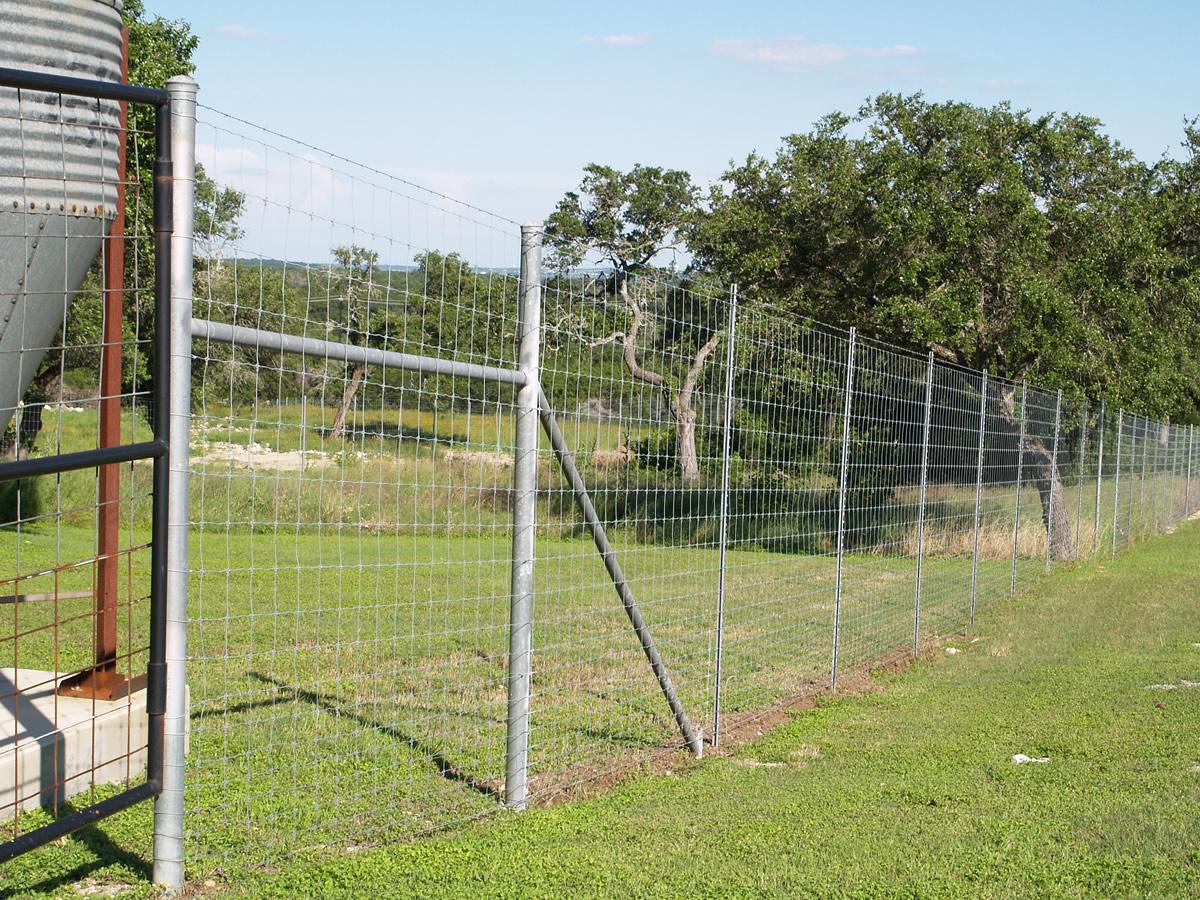
Our most common ranch build is 4 ft woven wire fence on steel T-posts, anchored by galvanized pipe H-braces at corners, ends and gates. The 4"x4" fabric keeps goats, sheep and dogs from slipping through, and a single strand of barbed wire on top discourages cattle and horses from leaning on the line.
H-braces are the backbone of any wire fence. Ours are set deep in concrete and built from galvanized pipe so the fabric stays tight for years.
Barbed wire, pipe and game fence
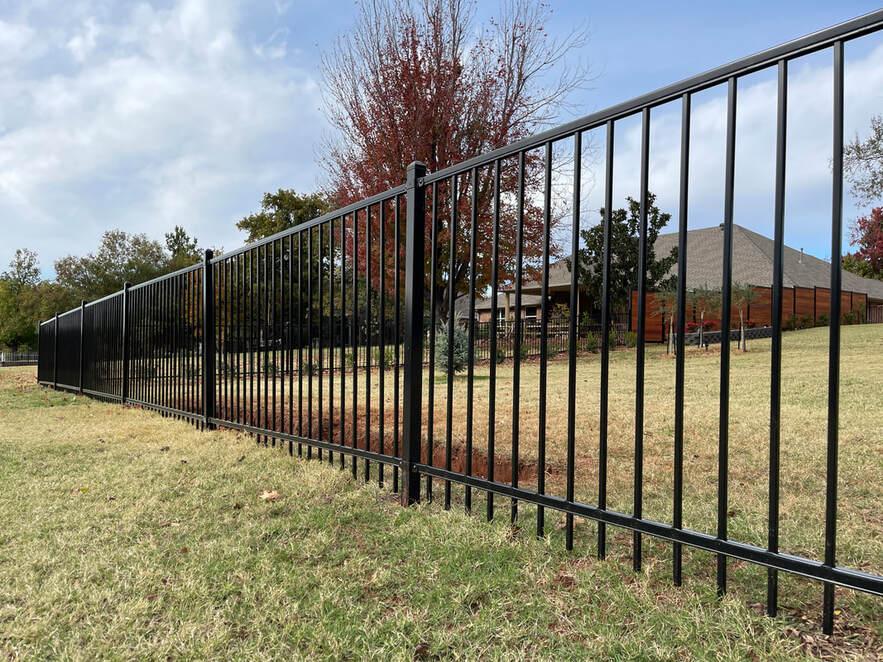
For pasture and boundary lines, 3 to 5 strand barbed wire is the lowest cost per foot for large tracts. Pipe fence gives you a permanent, strong look along entrances, pens and road frontage. For wildlife management, we build high game fence.
Ranch & Pipe Fence questions
How much does ranch fence cost per foot?
Barbed wire on T-posts is usually the lowest cost per foot, woven wire costs more, and pipe fence is the most permanent and highest cost. Terrain, corners, H-braces and gates also affect price. We provide free estimates.
What fence is best for my livestock?
Cattle are commonly fenced with 4 to 5 strand barbed wire. Goats and sheep do best with 4"x4" woven wire topped with a strand of barbed wire. Horses do well with pipe fence or woven wire. Deer and exotics call for high game fence.
What if my fence line has brush or rough terrain?
Tell us about brush, trees or rough ground when you request your estimate. We'll walk the line and include what's needed to build your fence right.
How far do you travel for ranch fence?
We build ranch fence throughout Wilson, Bexar, Guadalupe and surrounding counties. Call to talk through your project size and location.